From classroom to stage: The connection between TED-Ed Student Talks and TEDxYouth
By Fernando Oringo on June 8, 2026 in News + Updates, TED-Ed Student Talks
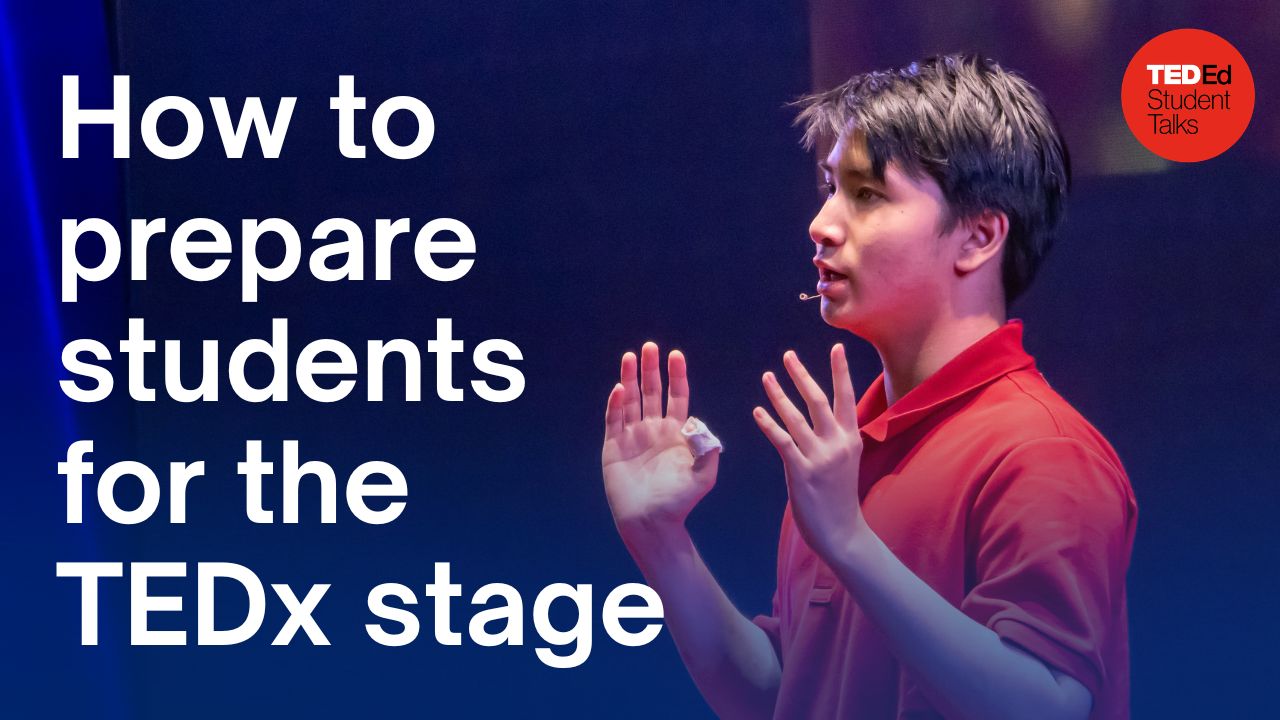
Xixi Wang
Every educator knows the challenge:
Teenagers have incredible ideas, but getting them to step up to the microphone takes more than just an invitation. It takes an ecosystem of support, practice, and inspiration.
At Unity Concord International School (UCIS) in Chiang Mai, Thailand, educators have cracked the code. By linking their year-round TED-Ed Student Talks group with their annual TEDxUCIS Youth event, they didn’t just create a one-off public speaking project — they built a self-sustaining pipeline of confident youth voices that is actively transforming their school community.
Fernando Oringo, International Co-curricular Coordinator of Ambassador Education Group, sat down with Abby Schrantz, the school’s TED-Ed Student Talks Coordinator, and Madison Conger, the TEDxUCIS Youth license holder, to learn how these two programs work hand-in-hand, and how other schools can replicate their success.
The Foundation: Building a Culture of Ideas
For UCIS, the journey begins in the TED-Ed Student Talks group, designed to give younger students a low-stakes environment to “get their feet wet.”
But how do you get 5th and 6th graders excited about public speaking? According to Abby, it requires more than just an email blast. It requires a personal touch.
“I always go to every 5th and 6th-grade homeroom and explain what TED-Ed Student Talks is,” Abby shares. “It really helps when their peers have done it themselves. I love hearing kids say to each other, ‘Oh, you should join the group, you should try it!’… It’s because of that personal touch that it has really grown into what it is today. Our group is currently at capacity.”
Inside the group, the focus is on constant innovation to keep the curriculum engaging. Abby regularly diversifies activities, stepping outside the facilitator guidebook to include interactive peer-review sessions. “Many times, we’re watching a talk from last year or last semester, and having them give feedback,” she notes. This peer-to-peer inspiration is the engine that drives the group forward.
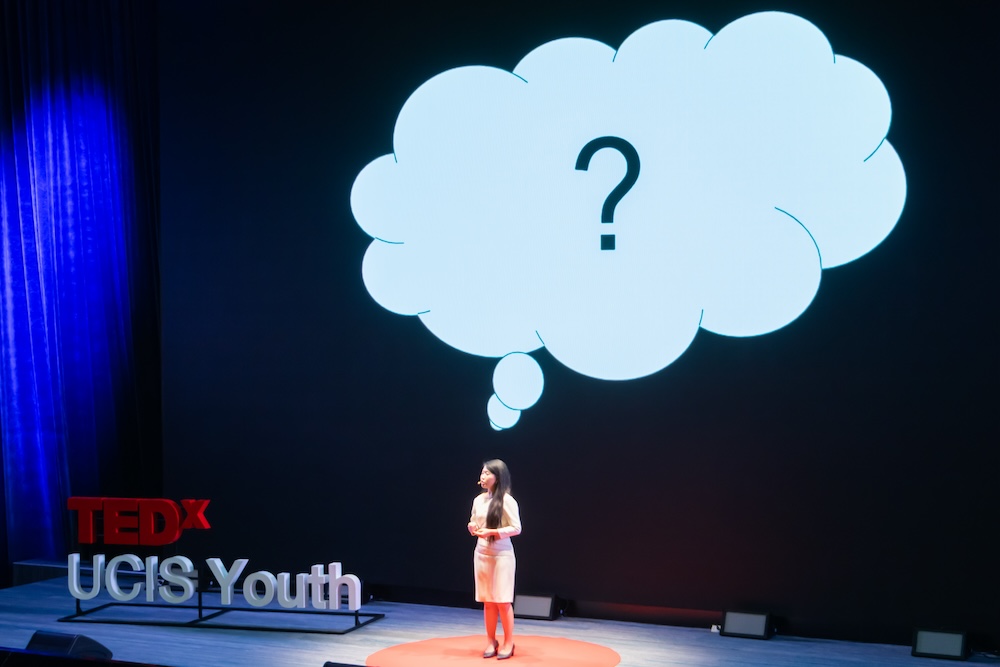
Student giving their talk at TEDxUCIS Youth event
The Catalyst: Experiencing the Main Stage
The true magic of the UCIS program happens when TED-Ed Student Talks intersects with the TEDxUCIS Youth event. Rather than keeping the two programs siloed, Abby and Madison ensure that the younger TED-Ed Student Talks students are part of the TEDx audience.
For the students, seeing older peers command a professional stage is a transformative “Aha!” moment. It takes the concepts they’ve learned in the classroom and makes them real.
“They were very excited and motivated,” Abby recalls after the recent TEDx event. “They came running up to me afterward to talk about the talks that really stood out to them. I think they then felt more inspired to fine-tune their own performances… How can they really add emotion? How can they improve their visuals? It was a great learning experience.”
Madison agrees that the event serves as an ultimate showcase, not just of speeches, but of ideas. The organizing team intentionally creates a multisensory experience — complete with art exhibitions and sensory rooms — turning the day into a true “celebration of ideas” that captivates the younger students in attendance.
The Pipeline: Why Organizers Love TED-Ed Student Talks
For educators looking to organize a TEDxYouth event, launching a TED-Ed Student Talks group first might seem like extra work. However, Madison points out that it actually makes the organizing process vastly easier.
“Young people are so busy,” Madison laughs, noting the struggle of managing extracurriculars, homework, and talk milestones. But having TED-Ed Student Talks acts as a training ground that pays massive dividends down the road.
“I spoke to some of the students that were in TED-Ed Student Talks last year who have since moved on to middle and high school, and they already know what to do,” Madison explains. “From our perspective organizing TEDx, it makes it a lot easier that you don’t have to start from square one. The kids know what TED-Ed Student Talks is, they know the process, they’ve been through it.”
By the time these students are ready for the main TEDx stage, they have already spent years generating ideas and presenting in front of peers. “It really helps create a roadmap for the kids,” Madison says. “They start in the younger grades, and then we guide them to the ultimate goal, which is the TEDx stage. They are very confident and know exactly what they’re doing.”
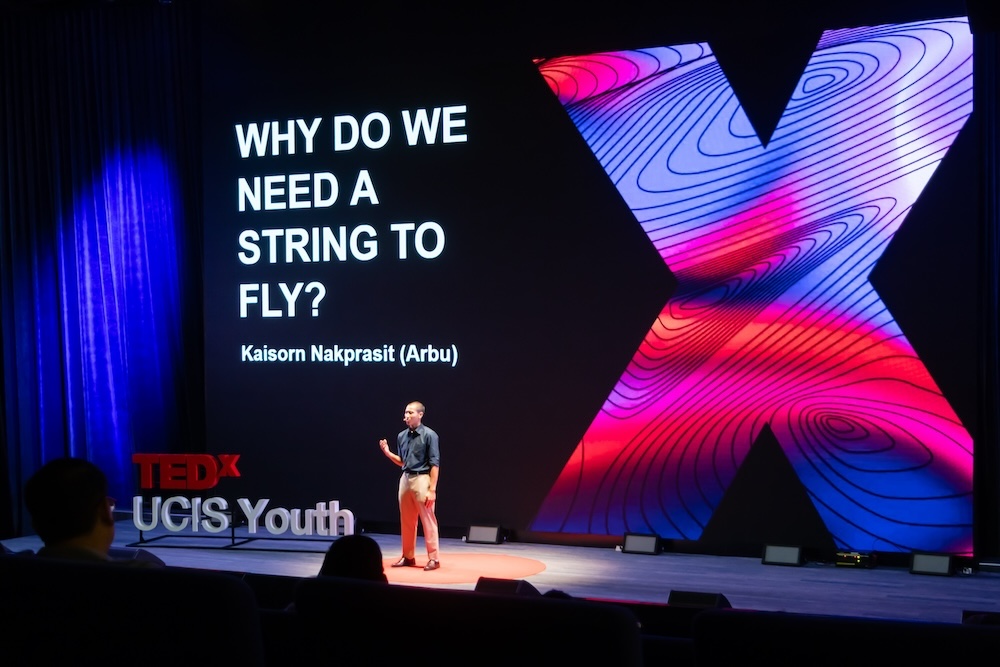
Student giving their talk at TEDxUCIS Youth event
Ideas That Spark Real Change
Ultimately, the goal of this dual-program approach isn’t just to teach public speaking; it’s to foster real-world empathy and community action. The ideas cultivated in TED-Ed Student Talks and amplified on the TEDx stage are actively shaping the culture at UCIS.
Abby notes that many students are tackling highly relatable, vulnerable topics like the dangers of overthinking and the pressure of societal expectations. “These are struggles everyone faces,” she says. “It’s a good reminder for all their classmates, and they have a platform to share about it.”
In some cases, the talks have led to direct institutional change. Madison proudly recalls a powerful moment from last year’s event: “One of our students gave a speech about cross-cultural kids and the challenges they face in an international setting. That talk inspired change to create a cross-cultural kid community here of parents and students to provide support… It’s not just a talk that people hear and then forget about. It actually inspires change. That was just so cool to see.”
Advice for Educators
For teachers hoping to bring this magic to their own schools, the roadmap laid out by UCIS is clear:
-
Start small and personal: Build excitement for your TED-Ed Student Talks group through classroom visits and peer-to-peer word of mouth.
-
Bridge the gap: If you host a TEDx event, give an opportunity for TED-Ed students to be part of the audience experience. Use the main stage as a real-time masterclass for your club members.
-
Play the long game: View your programs not as isolated events, but as a multi-year pipeline. Let the club serve as a low-stakes incubator, preparing confident, experienced speakers for your eventual TEDx stage.
“TED has actually become a part of our identity here. It’s a big brand that kids know,” Madison reflects. “It gives a platform for kids to talk about things they might not normally be able to share with a wider audience. It’s been really cool seeing kids get that opportunity.”
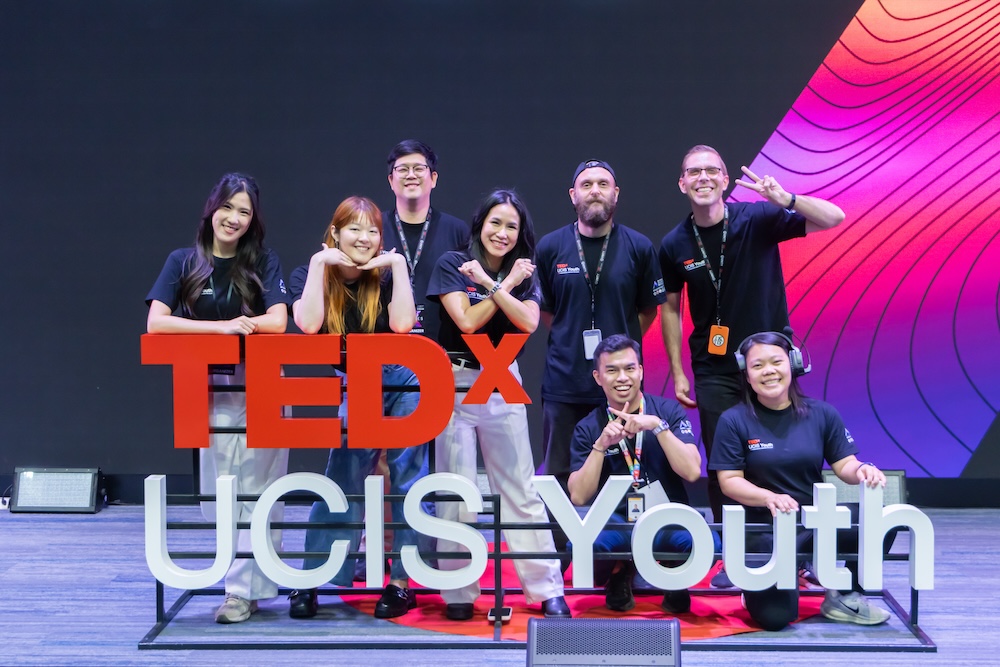
TEDxUCIS Youth event
ABOUT THE AUTHOR
Fernando Paet Oringo is an international educator and youth advocate who currently supervises the TED-Ed Student Talks program across a network of schools in Thailand, Vietnam, and Cambodia. Driven by a passion to amplify student voices, he is an active TEDxYouth organizer and a dedicated volunteer for standard TEDx events in Chiang Mai and Saigon. Fernando’s core mission lies at the intersection of cross-cultural pedagogy and student empowerment. He centers his career around mentoring the next generation of global change-makers.
TED-Ed Student Talks offers free, customizable activities for educators who work with students ages 6-18 in classrooms, schools, extracurricular settings and youth organizations. Submit an application to join today!